One of the most powerful tools in your organizing arsenal isn’t something you can buy on Amazon, pick up at The Container Store, or add to your cart during a Target run. It won’t cost you a dime, but it will take some practice to master.
That tool is patience.
The Rush to “Fix It Now”
I understand the urge to want to purchase something right now. When you’re staring at a chaotic linen closet, an overflowing pantry, or a bathroom cabinet where things tumble out every time you open the door, the impulse is to do something about it right now. You want a solution, and you want it fast.
So you grab the first set of bins you see. You order baskets because they’re on sale and you convince yourself they’ll probably work. You make a trip to the store and buy whatever fits your budget and looks “good enough.”
Here’s what happens next: those products don’t quite fit the space. They don’t match your home’s aesthetic. They don’t actually work for what you’re storing. The bins are too shallow, the baskets are too wide, or the containers make it harder—not easier—to access what you need.
Now you’ve spent money, you’ve added more stuff to your home, and you’re still frustrated. The organizing problem? It’s still there.
What Patience Actually Looks Like in Organizing
Patience in organizing isn’t about doing nothing. It’s about being intentional.
Let me give you a real example. Recently, I worked on a bathroom with an open shelf under the sink. The space was visible every time you walked into the room, so whatever we put there needed to be both functional and beautiful. The shelf had specific dimensions, and we needed to contain everyday bathroom items without creating visual clutter.

We could have rushed to buy the first baskets we found. But instead, we practiced patience:
- We measured the exact footprint of the shelf
- We considered the bathroom’s existing aesthetic—the colors, the textures, the overall vibe
- We thought carefully about what items these baskets would need to hold
- We researched options that would be durable and timeless
The result? Two beautiful open baskets that fit perfectly, hold exactly what we need, and look like they were designed specifically for that space. Because we waited, we got it right the first time.

The True Cost of Impatience
When you rush to buy organizing products, you end up paying in more ways than one:
Financial cost: You buy products that don’t work, which means you’ll either live with a subpar solution or buy replacements later. Either way, you’re spending more money than if you’d just waited for the right solution.
Physical clutter: Failed organizing products become clutter themselves. They take up space in your garage, your basement, or worse—they stay in the space they don’t work in, mocking you every day.
Mental exhaustion: There’s a specific kind of frustration that comes from looking at an organizing solution you know isn’t right. It’s a constant reminder that the space isn’t working, and that mental load is real.
Wasted time: You’ll eventually have to revisit the project anyway, which means you’re doing the work twice.
How to Practice Patience (When Every Part of You Wants to Rush)
I know telling you to “just be patient” isn’t particularly helpful, so here are some practical ways to build this skill:
1. Live with the space first
Before you buy anything, spend time actually using the space you want to organize. Notice what’s frustrating you. Pay attention to how you naturally reach for things. Observe what times of day you use the space and what that reveals about your needs.
This observation period gives you crucial information that will lead to better product choices.
2. Measure everything (and I mean everything)
Get specific measurements:
- The width, depth, and height of your space
- The dimensions of what you’re storing
- Any clearance issues (like cabinet doors that need to close)
- Sight lines if the space is visible
Write these measurements down. Keep them in your phone. Bring a tape measure when you shop. This removes the guesswork and the “I think it’ll fit” optimism that leads to returns.
3. Create a criteria list
Before you start shopping, write down what your ideal solution needs to do:
- Does it need to be washable?
- Should it match a specific color palette?
- Does it need to stack or nest?
- Will you need to see what’s inside, or is concealment better?
- How important is durability vs. budget?
Having criteria helps you evaluate options objectively instead of emotionally.
4. Think about longevity
When I recommend products, I’m always considering whether they’ll still be useful five years from now. Can this basket move to another room if your needs change? Will these bins still make sense if you move to a different home? Is this a style you’ll still like in a few years, or is it very trendy?
Choosing products with longevity in mind means you’re less likely to regret your purchase.
5. Give yourself permission to wait
Here’s something that might feel radical: it’s okay if your space isn’t perfectly organized right this second.
I know the chaos feels urgent. I know you want it fixed yesterday. But a space that’s temporarily imperfect is better than a space with the wrong solutions that you’ll have to redo anyway.
Set a reasonable timeline—maybe you’ll give yourself two weeks to research and find the right products. During that time, you can still make progress by decluttering, cleaning, or simply living with the space to understand it better.
Here’s another example of a client space that took patience…
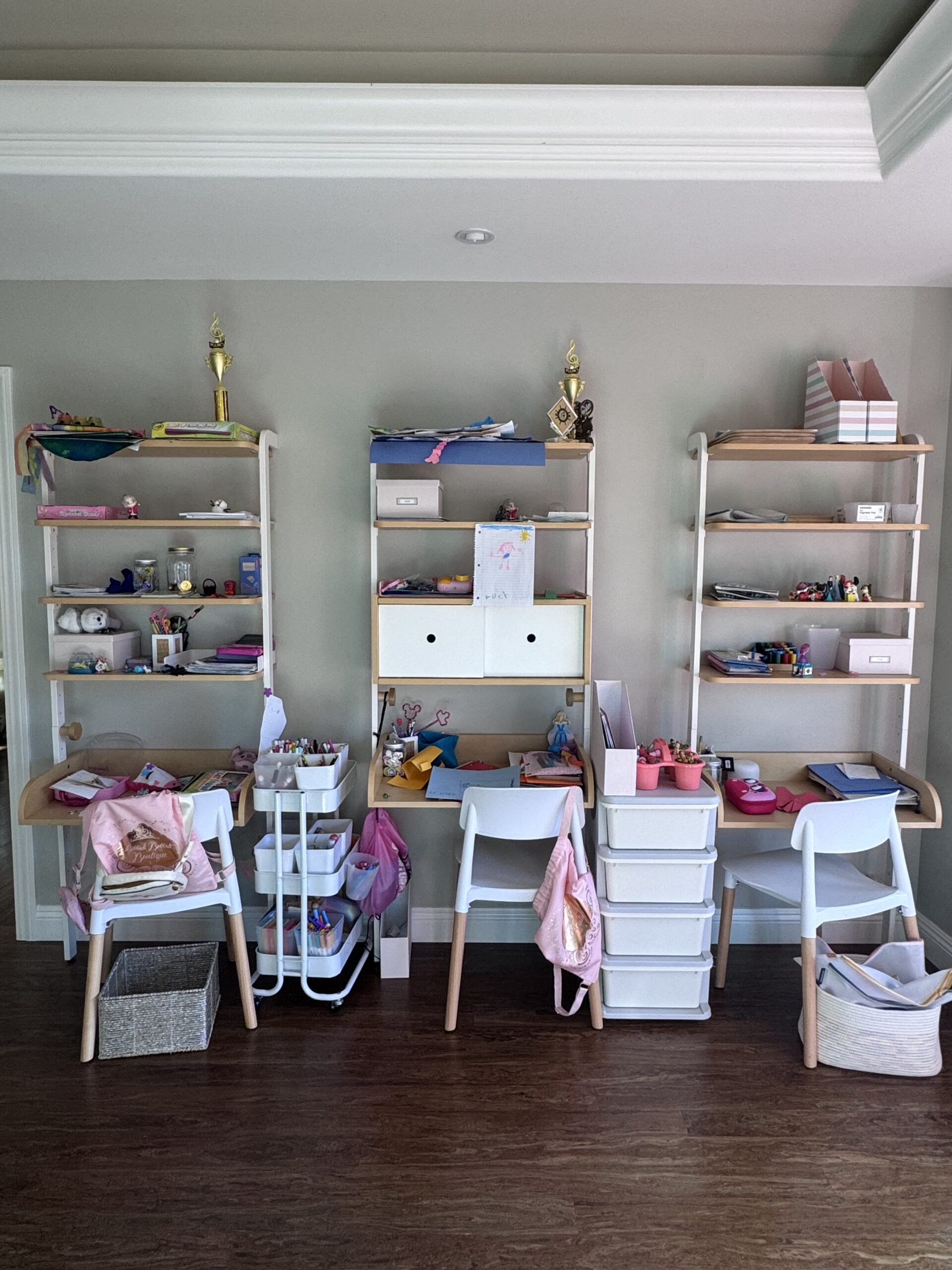
Most spaces we work in require some amount of thinking time. The pressure is definitely on when I am considering solutions or products that involve a monetary investment from a family. I’m extremely sensitive and careful about this.
This set of 3 wall desks were bugging mom because there were so many things piling high on each of the shelves. I wanted to make the most of what she currently had, which would mean less money spent on something new. And I needed a few weeks to consider how this space could be organized well because it’s visible as soon as you walk in the front door.
In the end, what helped transform this space was removing 1 shelf from 2 of the wall desks and better space plan the remaining shelves. This means less items piling AND I could actually add in some functional concealed storage. I added additional storage products, similar that what she already owned, in different colors so that each of the girls has a designated color at their desk.

( products here )
What a difference! But this wasn’t possible without taking the time to really consider what would work…and save money.
What You Gain by Waiting
When you practice patience in your organizing projects, you get:
Solutions that actually work: Products that fit your space, your items, and your lifestyle mean you won’t be redoing the project in six months.
Money saved: You only buy once, and you buy the right thing.
A home that feels cohesive: Thoughtfully chosen products that match your aesthetic make your whole home feel more pulled together.
Confidence in your decisions: There’s no buyer’s remorse, no wondering if you should have kept looking. You know you made the right choice.
Space that stays organized: When solutions work well, they’re easier to maintain. You’ll actually use the systems you create.
Patience isn’t sexy. It doesn’t promise instant transformation or dramatic before-and-after photos you can post immediately.
But it’s the difference between organizing that sticks and organizing that fails.
The next time you’re tempted to panic-buy bins or impulse-order baskets, take a breath. Measure your space. Think about what you really need. Wait for the right solution.
Your future self—and your wallet—will thank you.
What organizing project are you working on right now? Are you rushing to find a quick fix, or are you practicing patience? I’d love to hear about it in the comments.
comments +